
The World Is Not Flat: MISMO SMART Docs Vs Dumb PDF “Doc Gen” Systems
There was a time when people swore the earth was flat and despite Aristotle’s proclamations to the contrary, it wasn’t until 1522 when Ferdinand Magellan proved them wrong. I use this example today as most traditional “Doc Prep” systems still produce static, flat file dumb PDF’s and then use OCR scanning to get to the data. Even with the advent of AI, if you’re still using dumb PDF’s to extract unstructured and non-standard data from them you are going to get totally different and varying results across systems as there is no consistency or uniformity in the data format or how it gets defined (descriptions) and interpreted.
It is this flat earth thinking that applies to what a new “Doc Prep” system should look like as most still maintain thousand lines of assembly rules logic code against thousands of static forms (templates) to produce compliant docs. This is not scalable, sustainable or maintainable and a very antiquated old world way of thinking about creating and maintaining docs of the future.
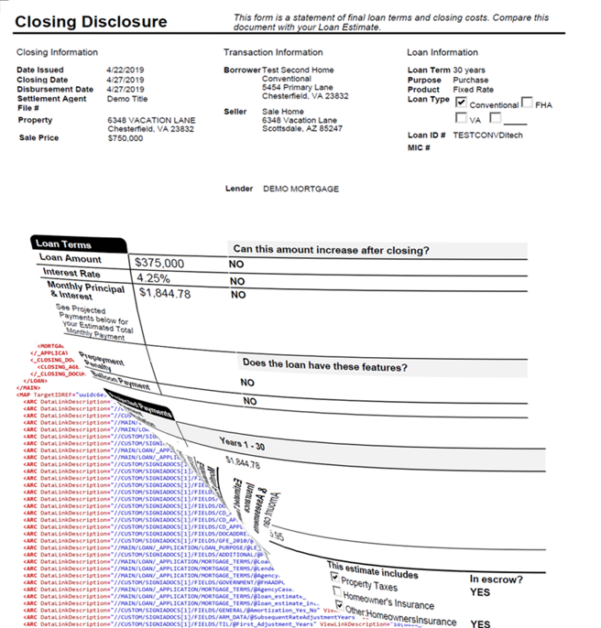
MISMO SMART Docs is truly transformational and solves many of the problems with fixed, static forms based systems SMART stands for Secure, Manageable, Archivable, Retrievable, Transferable and now with the latest V3 “Verifiable” version were are not generating traditional “docs” in the old PDF flat world but introducing a totally radical new “Next Generation” of intelligent data driven doc creation that is native XML based and not static template forms based.
Why is this important – No such thing as a single system of record
Getting to and using the most current, clean and complete data has always been a core issue for systems as data is captured, modified and updated at various times via many systems along the mortgage manufacturing process. Hence the need to continually QC and validate the data as it moves from the POS, LOS, Title TPS, Secondary and eventually to the loan servicing system and goes full circle again when you want to modify or refi the loan.
Already AI enabled supporting automated validation and verification
In this new era of AI you can run your logic/algorithms directly against the pure native XML that is contained “inside” the documents so they are as clean, current, complete and compliant as possible. In the old world you still had to OCR scan the dumb PDF documents to extract data from them. And the data that gets extracted is only as good as the images it receives and as complete as the doc set that is delivered at the time.
Utilizing a common data standard, structure and language that all systems can interpret and understand creating consistent outcomes
Also the data inside of a SMART Doc package utilizes standard MISMO structured data definitions so that any system that is using, sharing or repurposing the data will mean the same thing to all systems resulting in consistent, accurate and replicable outcomes no matter how many systems touch and modify the data across the mortgage manufacturing process. This also ensures “trust” in the data and process you are using and delivering to other parties and systems downstream.
Dynamic data extension, version control and more
No more working in the limited confines of fixed form fields or hard coded documents.Document spaces automatically expand to handle extended names, property descriptions, signatures etc. Form output (image) is dynamically created from the meta data so no more maintaining doc libraries of thousands of custom forms and creating and maintaining the forms logic to search and find the right templates to assemble doc packages. This is a tail wagging the dog approach.
More accurate conditions based “Doc Gen”
Also since the data drives the documents, things like miscellaneous check boxes that do not apply are not shown in the document view so only the conditions that are specific and relevant to the loan are displayed.
Synching and sharing commonly shared data fields and documents
No one system has total control over the data or documents. Many times data is updated at different times separate from the documents. As an example, in the case of title documents crucial data fields are shared by both the title and lenders system that lenders count on to produce compliant TRID disclosures.
The issue here is conditions can continually change from app to close even up to the minute of closing. Since data and documents are updated at different times and systems it’s very hard to ensure true accuracy and compliance. With SMART Docs the document actually becomes the commonly shared “system of record” as the data and document is automatically synched and dynamically updated so you know you are always working with the most current information and document version. It is a living breathing document that gets shared and updated along with a date and time stamp audit trail that provides electronic/proof evidence of compliance on who did what, why and when for the life of the loan.
Ensuring highest level of accuracy, integrity and compliance across all data and documents
The unique structure of a SMART Doc uses data linking meaning that if you change a critical data field like loan amount on one document that is commonly shared across multiple documents, it automatically changes all the affected fields on the documents simultaneously. In older systems sometimes you need to go to different screens to make these changes.
Easily maintainable, sustainable and scalable
Since the system is XML based instead of static forms based, the ability to maintain and ensure compliance upkeep of the forms takes far fewer resources both from a human capital perspective as well as system resources as it data logic maintained and driven, it only takes seconds to dynamically create, display and print the forms that are created on demand.
Some real world examples
Recently the GSE’s updated the UAD to 3.6 which almost doubles the amount of data that is now required. If working with dumb static PDF’s this would be yet another form you would have to manually update and maintain separately. But the new spec totally replaced the old legacy appraisal forms (1004, 1073, etc.) that were static and rigid and because of this often forced appraisers to “fit” unique properties into predefined boxes.
UAD 3.6 introduces a dynamic, property‑agnostic structure that dynamically adapts to the subject property and assignment type. This new format allows for a consistent machine readable data standard resulting in higher data quality, accuracy, integrity and interoperability between systems that utilize it. This also reduces the issue with maintaining different versions and delivers a more flexible framework that supports any property type or lending scenario.
Another current real world example is many doc prep providers have invested thousands of man hours into trying to make their template based doc libraries ADA compliant. This entails linking static messages into static templates and then maintaining them anytime those documents change. This again is not sustainable, maintainable or scalable. With SMART Documents you’re just putting conditional logic statements directly into the XML and can be easily modified to do so much more intelligent things like decisioning, interpreting what type or level of help is needed, include chat, video, including what type of closing, (paper, hybrid or full eClosing) etc into the document to make them as actionable and dynamically intelligent as you want instead of just putting in fixed statements into dumb PDF documents.
Self verifiable, validated and certifiable
Again with the new power of AI the data inside the document lends itself to systematically interrogating the data to ensure it meets investor guidelines and QC compliance checks “before” final documents are drawn. This ensures the greatest level of compliance possible eliminating the need to do a post closing review before funding. And this can be performed on 100% of the data on 100% of the documents to ensure a consistent and compliant underwriting decision each and every time.
Protecting the legal sanctity and security of both the data and documents
Finally, after the documents have been systematically blessed if eClosed they are immediately locked down and a tamper evident seal is wrapped around the entire package so no one can change them once approved. A date and time stamp audit trail of who did what and when is created and stored for the life of loan in the eVault providing future electronic proof of compliance if ever contested. And since the audit trail can travel with the documents this also delivers the metadata to ensure they are provable and compliant (electronic evidence) to hold up in any court of law.
AI generated summary
It’s a new age and era. We are going from dumb fixed, static based PDF’s to native intelligent, dynamic, actionable and verifiable data driven doc creation
- Ditch those dumb PDFs! Most “Doc Prep” systems still spit out flat-file PDFs, and then you have to use OCR to guess at the data. Even with AI, pulling info from those unstructured PDFs is a nightmare of inconsistent results.
- Stop the old-school thinking.Maintaining thousands of lines of logic against thousands of static form templates to make compliant docs? That’s totally old-fashioned, not scalable, and just a headache.
- Enter MISMO SMART Docs (the real answer!). SMART stands for Secure, Manageable, Archivable, Retrievable, and now “verifiable.”
- It’s all about the data, baby! We’re not making old-world PDFs anymore; we’re using “Nex Gen” data-driven doc generation that’s native XML-based, not based on fixed, static template forms.
- Clean and current data is key. Data gets messed up as it moves through systems (POS, LOS, Title, etc.). SMART Docs help you start with the cleanest, most complete data possible.
- AI loves SMART Docs. You can run your AI algorithms directly against the pure native XML data inside the document. Plus, the data uses standard MISMO definitions, so every system understands it the same way, leading to consistent, accurate results. Trust restored!
- Say goodbye to data field limitations. SMART Docs are dynamic. Field spaces expand automatically for long names, descriptions, etc.
- No more maintaining static form libraries! The document image is created dynamically from the metadata. You don’t have to keep thousands of forms and the logic to assemble the right list of templates—that’s just backward thinking.
- Data linking is a lifesaver. Change the loan amount on one SMART Doc, and it automatically updates every other affected field across all the documents in the package. No more jumping between screens!
- The document is the system of record. Since both data and documents can change constantly thru different systems up to closing (like with title fee info), SMART Docs automatically sync the data and the document. You know you’re always using the most current data and latest version, and it has a date/time-stamped audit trail showing who did what, when, and why. It’s a “living, breathing document.”
- Maintenance is super easy. Since it’s XML data-based, not forms-based, updating for compliance is much faster and cheaper. It takes seconds to create, display, and print a whole closing package.
- Real-world win: When the GSEs updated UAD to 3.6 (doubling the required data), static PDF systems had to create a whole new form. Not with SMART Docs!
- Accessibility is built-in. Instead of manually linking static ADA messages into thousands of templates (which is impossible to maintain), with SMART Docs, you put conditional logic into the XML. You can do cool stuff like decisioning, offering chat/video help right in the doc, and making it way more intelligent than a dumb PDF.
- It’s all about keeping up. Compliance success depends on how much you can maintain and scale. SMART Docs are secure, validated, verified, provable, and compliant!

Tim Anderson is Executive Advisory Board Member at Stavvy. The company is a Boston-based, venture-backed financial technology company building software to help organizations manage security risk, foster collaboration, and increase the speed and transparency of real estate transactions. The Stavvy platform includes eClosing, loss mitigation, and foreclosure solutions with eSign, digital notarization, and video conferencing functionality. Stavvy’s mission is to transform fragmented workflows into seamless real estate transactions so people can focus on what matters most.